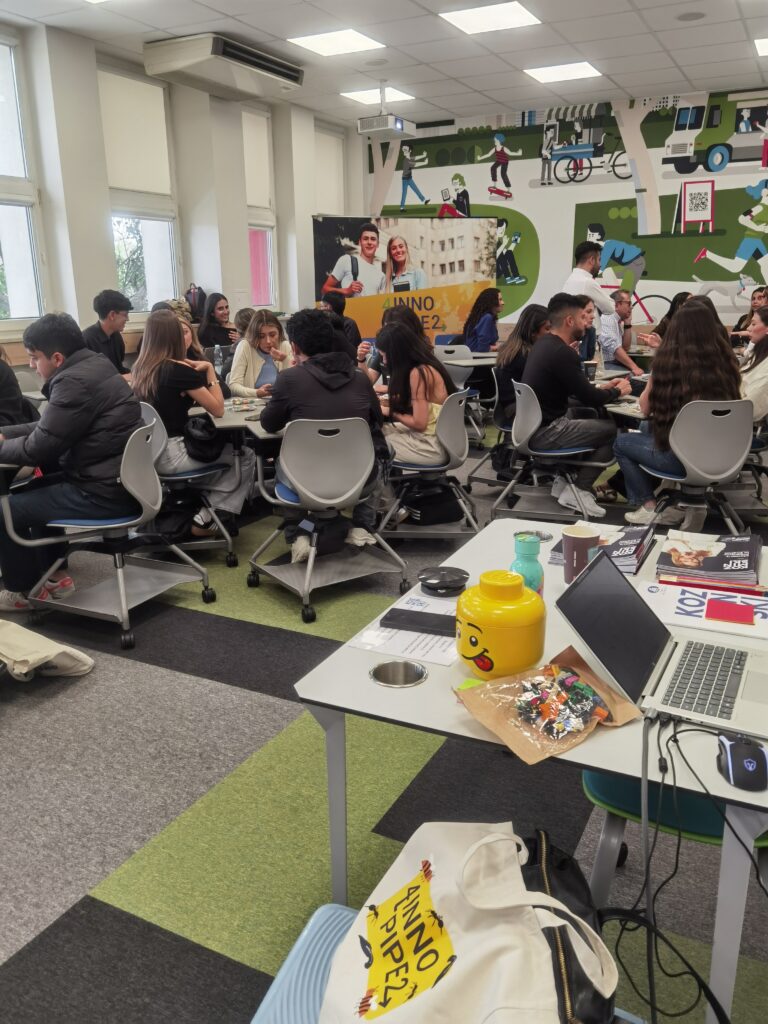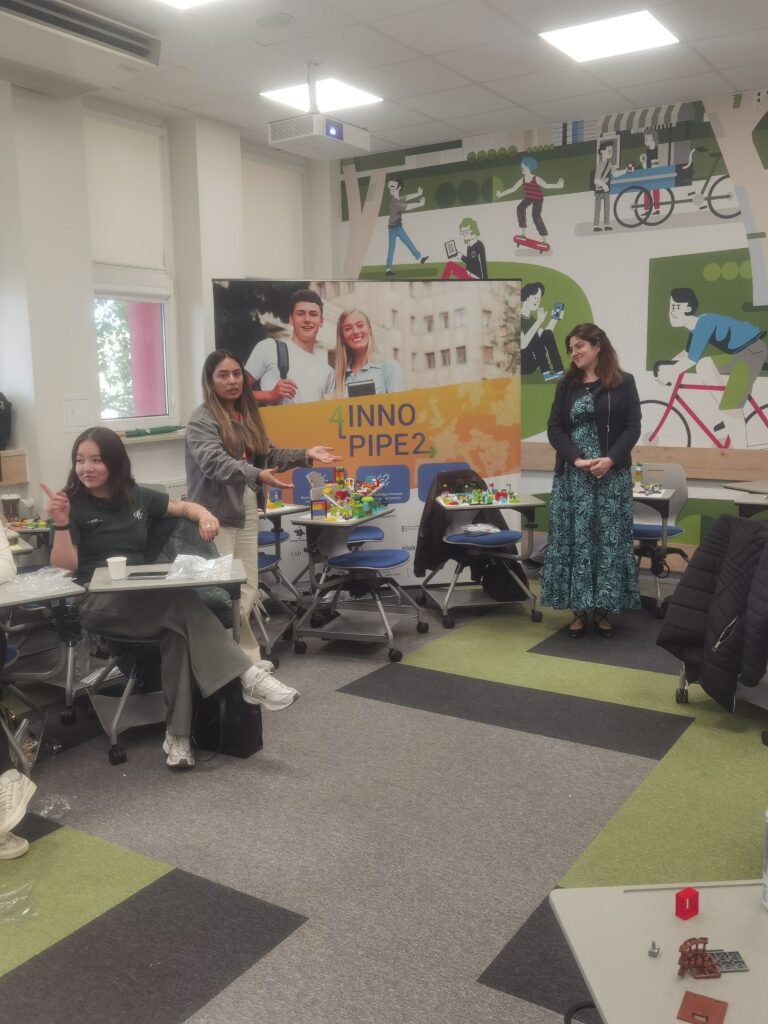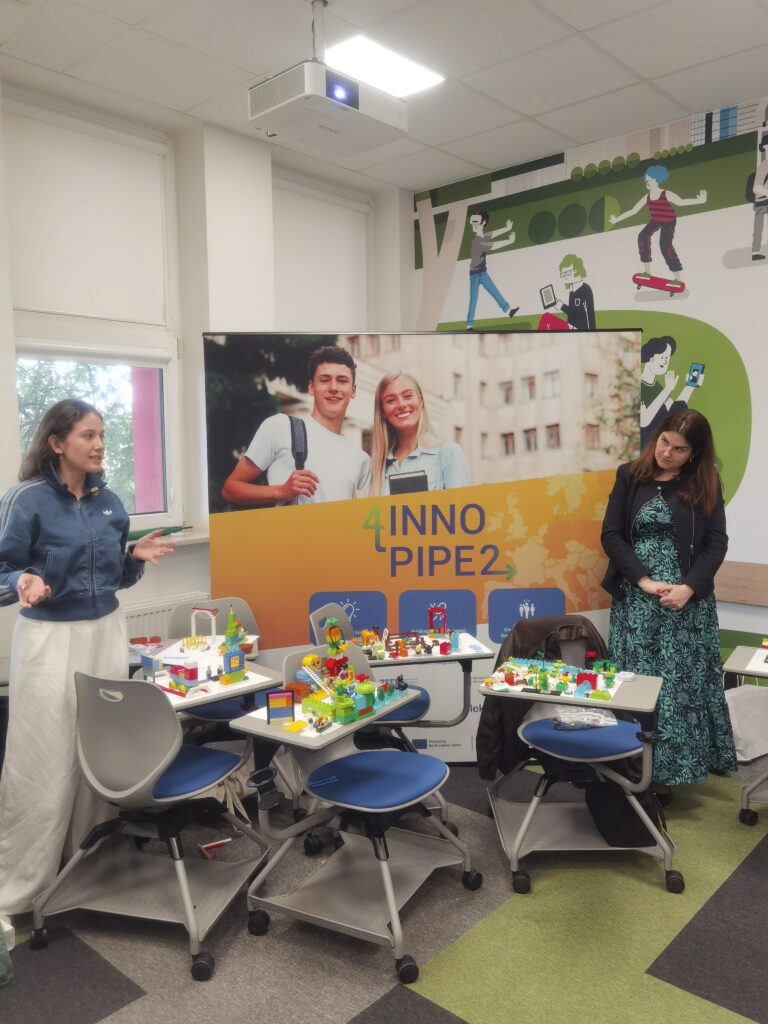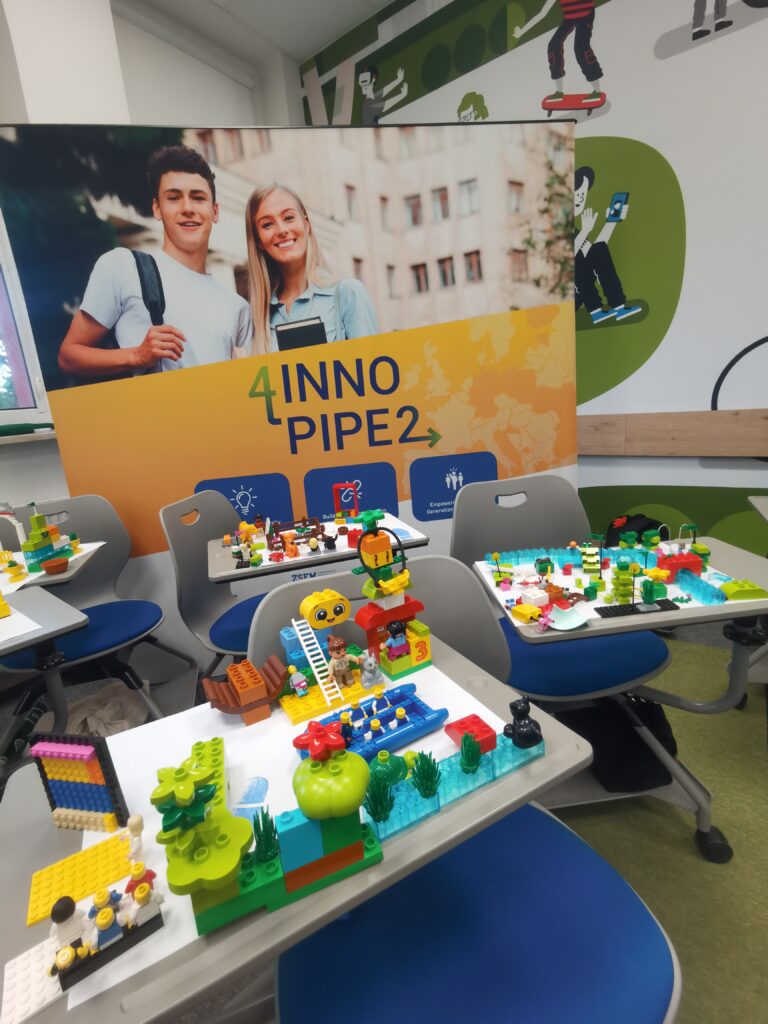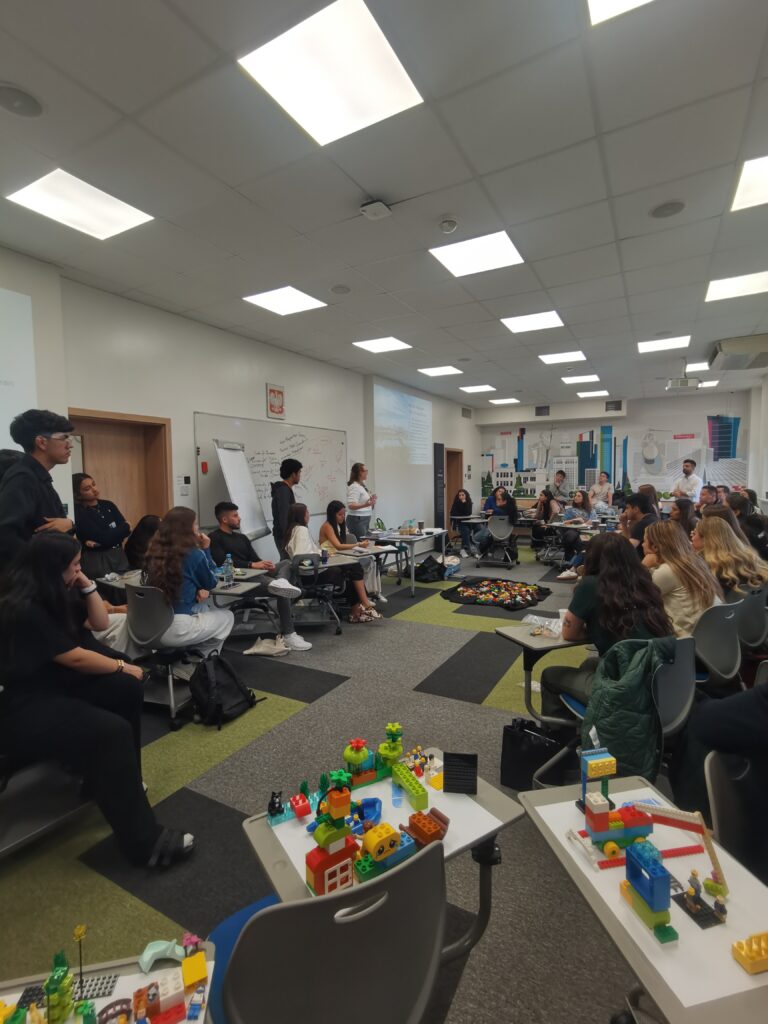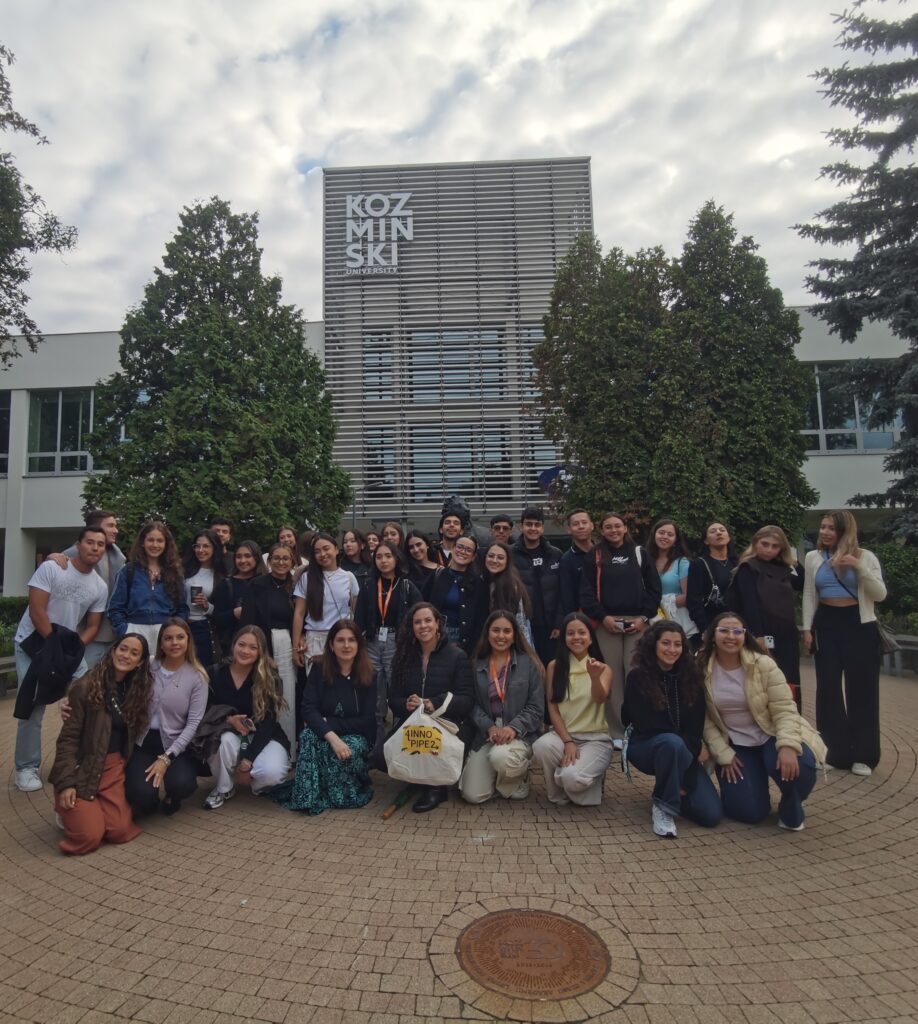

As part of the 4InnoPipe2 initiative, a group of students from Universidad de La Sabana in Colombia, invited by Mariano Doncel., participated in an interactive workshop conducted by Monika Sonta, PhD, entitled “Brick by Brick: Designing Ideas with Real Innovation Potential.” We were talking (and building LEGO models)about experimenting, testing, and generating customer traction.
The session focused on entrepreneurial experimentation, testing assumptions, and designing pathways toward customer traction using the LEGO® Serious Play® methodology. Particular emphasis was placed on conversations about real entrepreneurial challenges, identifying early adopters, and defining the next actionable steps in venture development.
The workshop also supported the Triple Helix model by strengthening collaboration and knowledge exchange between academia, business, and innovation ecosystems. Through interdisciplinary teamwork and entrepreneurial thinking, participants explored how universities can foster innovation capabilities connected to real market and societal needs.
A key theme of the workshop was the significance of customer traction in the innovation process. Traction represents a critical milestone because it demonstrates that a startup has moved beyond theoretical assumptions and validated elements of its business model in the real world (Geelen et al., 2022; Ghezzi, 2018).
During the session, participants explored how customer traction contributes to:
- Market Validation – confirming that a real market exists and that customers are genuinely willing to engage with or acquire the product;
- Signaling to Stakeholders – reducing uncertainty and communicating venture quality to investors and ecosystem partners;
- Foundation for Scaling – supporting the transition from experimentation to product–market fit and long-term growth.
Using LEGO® Serious Play®, students visualized customer needs, barriers, and value propositions while collaboratively building scenarios connected to experimentation and market testing.