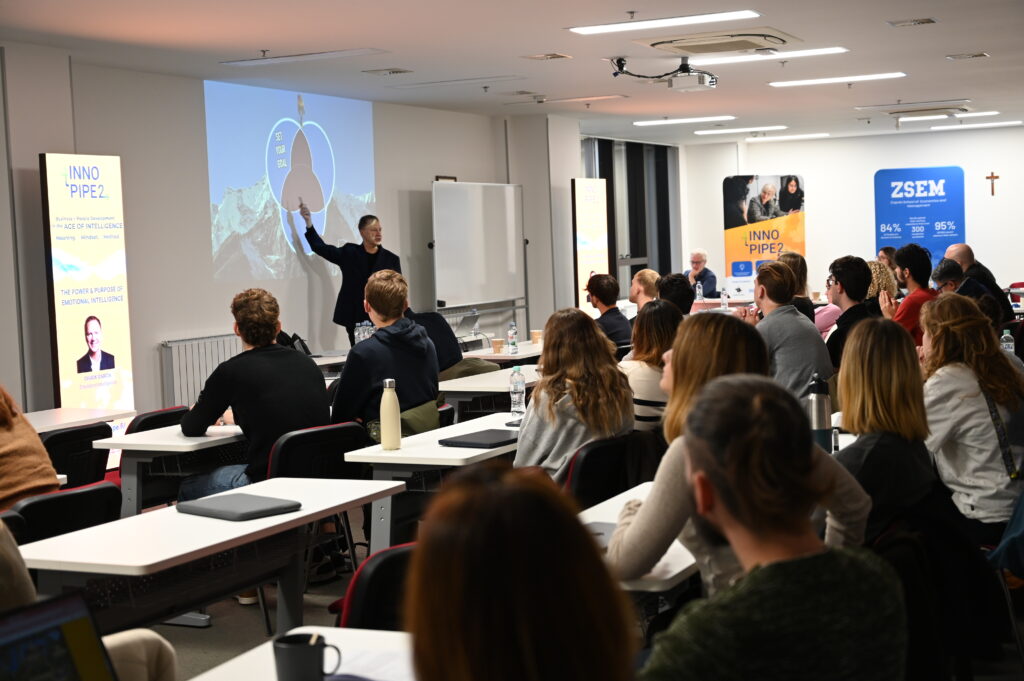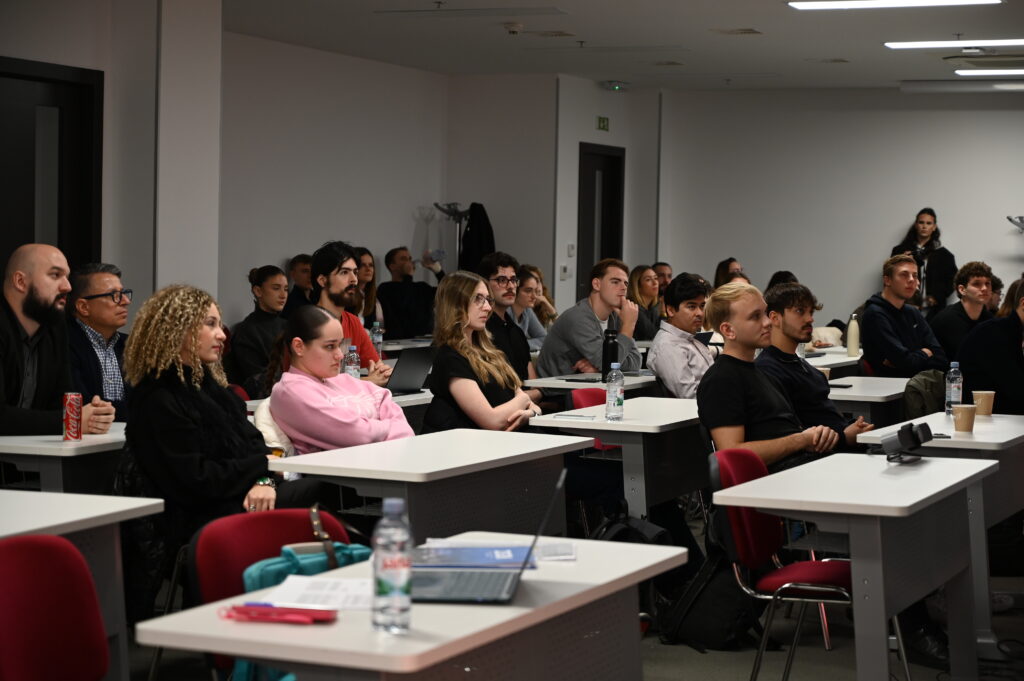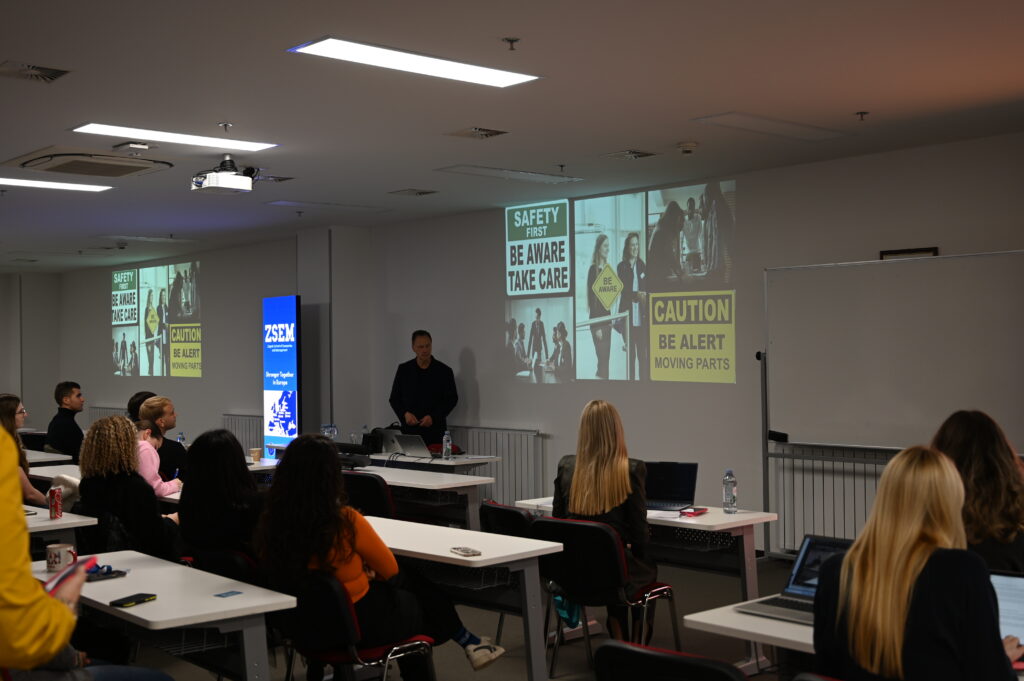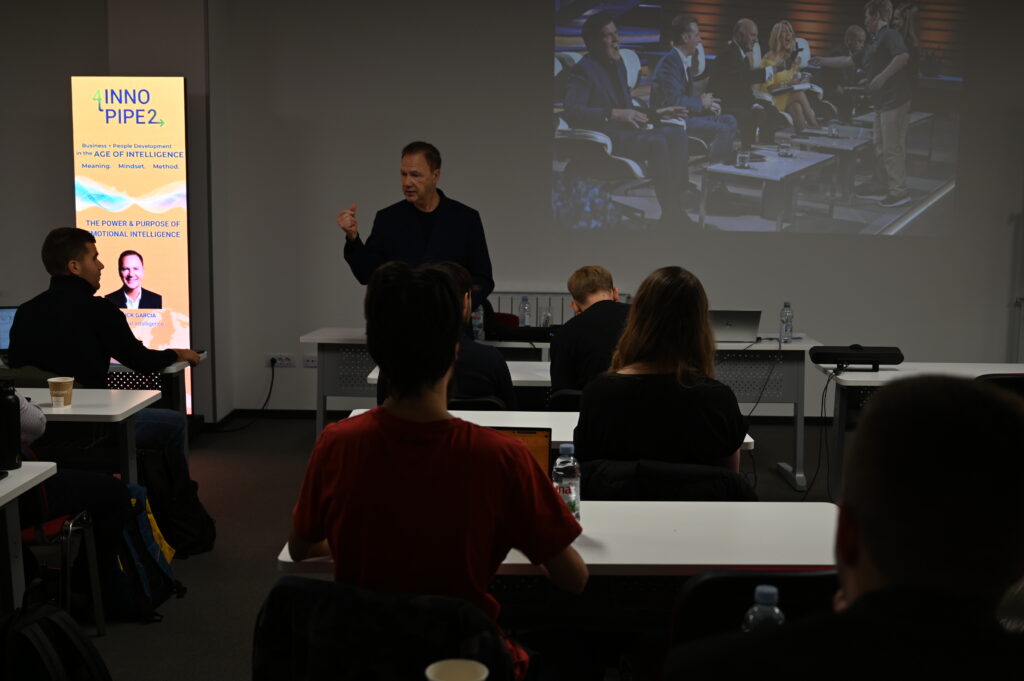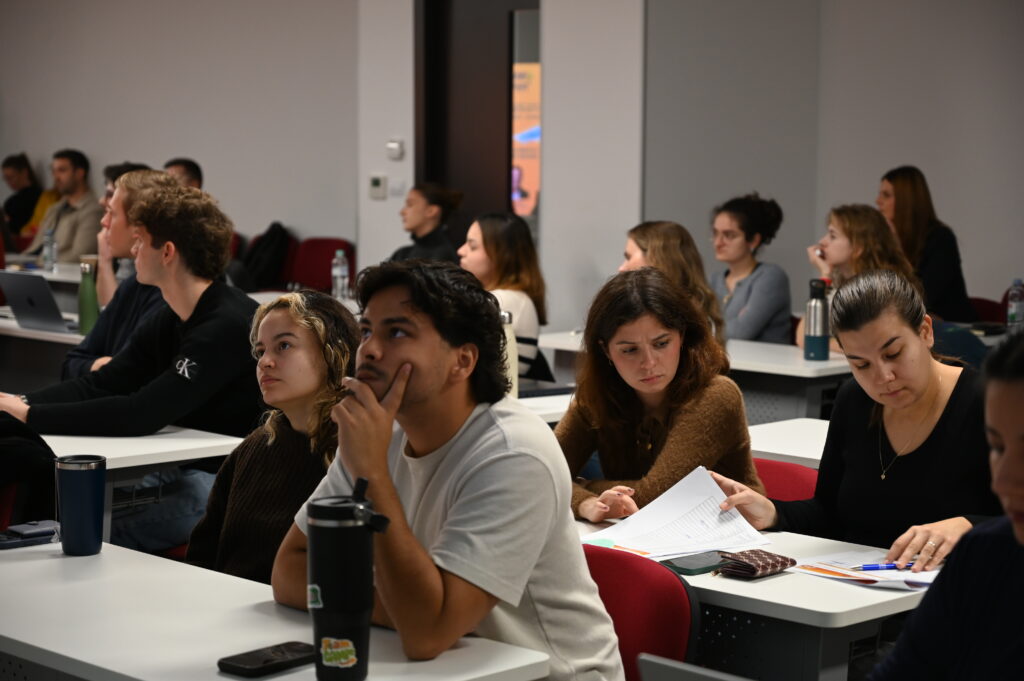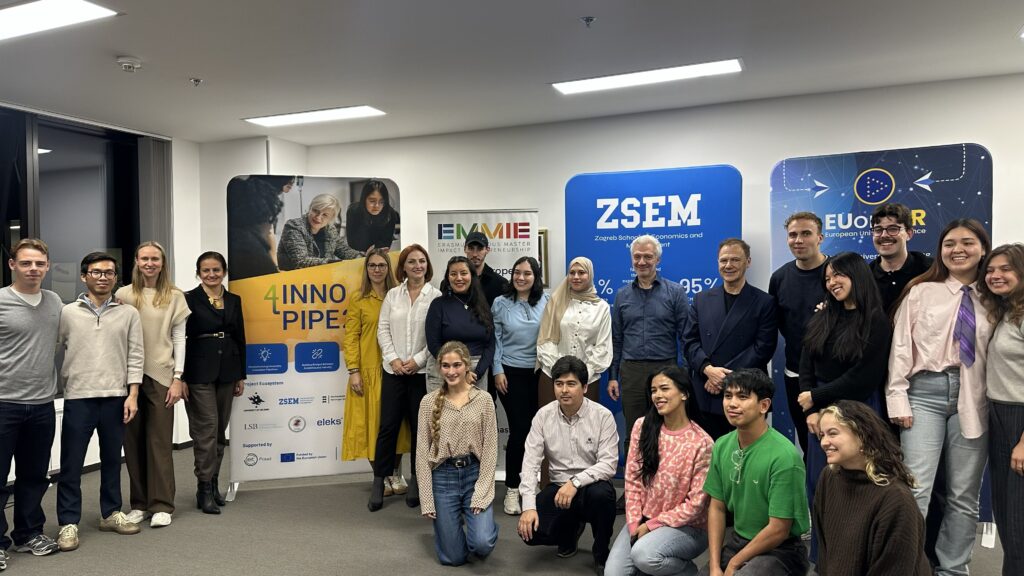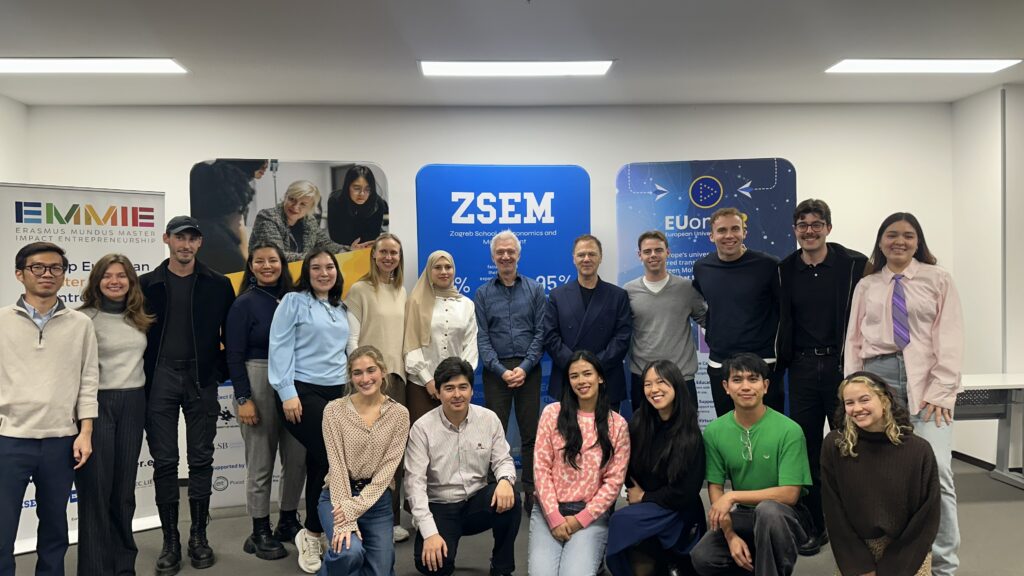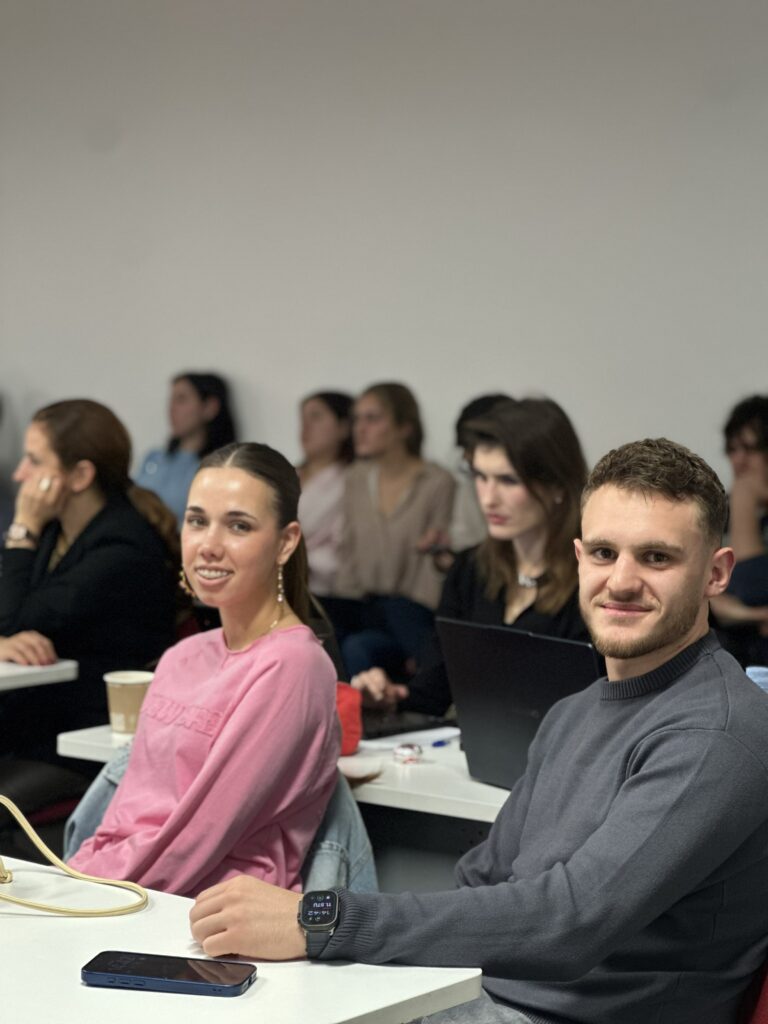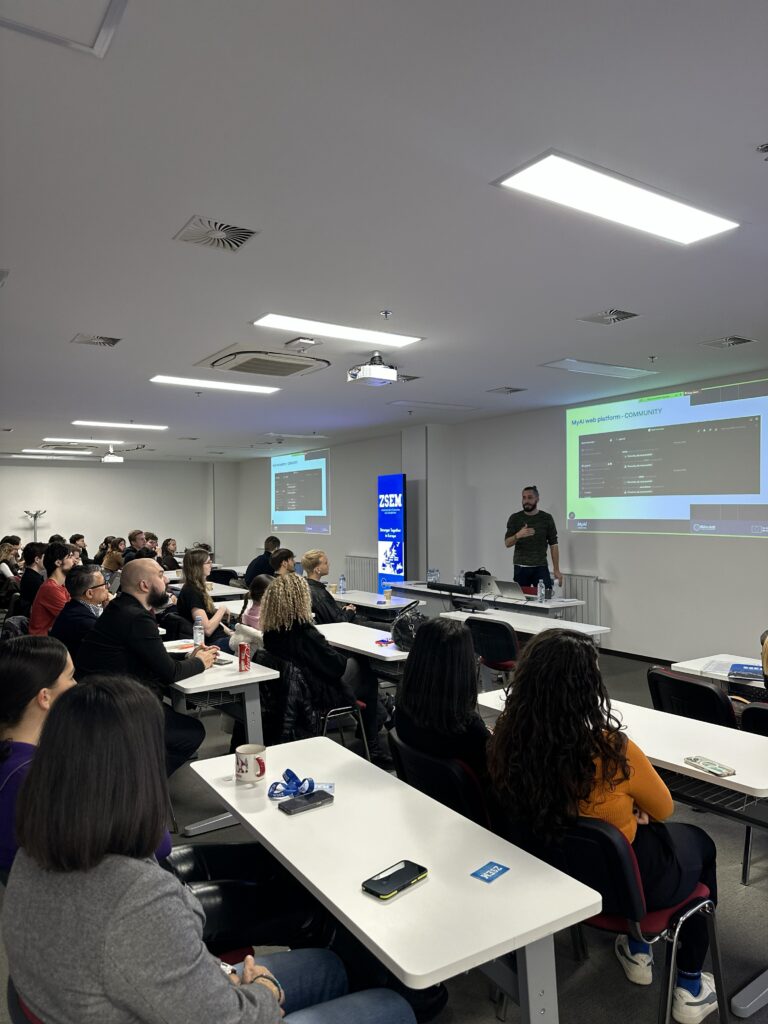

How can we develop human potential and lead businesses successfully in the age of artificial intelligence? These questions were at the heart of the international masterclass “Business + People Development in the Age of Intelligence: Meaning, Mindset, Method,” held on November 11, 2026, at the Zagreb School of Economics and Management (ZSEM), as part of the international 4InnoPipe2 project. The event brought together 180 participants, both onsite and online, demonstrating strong interest in emotional intelligence, leadership, business communication, and the creative application of artificial intelligence.
Following last year’s successful edition, international experts Chuck Garcia and Pascal Wiscour-Conter returned to ZSEM for the second consecutive year, bringing together students, professors, representatives of higher education institutions, and business professionals.
This year’s masterclass attracted 180 participants, representing an 80% increase compared to last year’s 100 attendees. Beyond the impressive turnout, the event stood out for the quality of its content, the practical relevance of the topics, and the exceptional presentation skills of both speakers, who kept participants engaged throughout the full-day program.
Through two complementary masterclasses, participants explored how personal and professional development can be connected to the challenges of today’s business environment, where artificial intelligence is increasingly transforming the way we work, communicate, and make decisions.
Chuck Garcia: Emotional Intelligence as the Foundation of Effective Leadership
The first part of the program was led by Chuck Garcia, an internationally recognized leadership development expert, founder of Climb Leadership International, faculty member at Columbia University, and author of A Climb to the Top and The Moment That Defines Your Life.
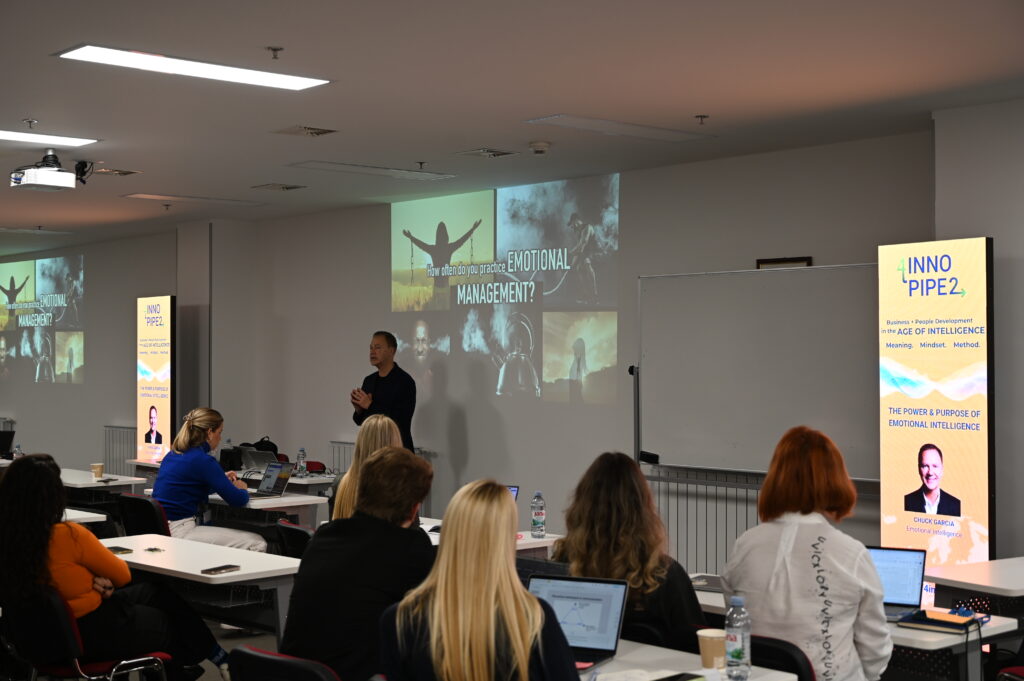
During his masterclass, “The Power & Purpose of Emotional Intelligence,” Garcia explored the importance of emotional intelligence in personal and professional development, with a particular focus on self-awareness, emotional regulation, empathy, and leadership.
By connecting modern research on emotional intelligence with Stoic philosophy, he demonstrated how a deeper understanding of our emotions and reactions can contribute to better decision-making, more effective communication, and stronger performance in challenging business situations.
His session was characterized by dynamic delivery, real-world examples, and practical insights, making complex concepts accessible to participants from diverse professional backgrounds.
One of the key strengths of his presentation was the ability to connect theoretical knowledge with everyday challenges faced by managers, employees, entrepreneurs, and future business leaders.
Pascal Wiscour-Conter: Purpose, Storytelling and the Creative Application of AI
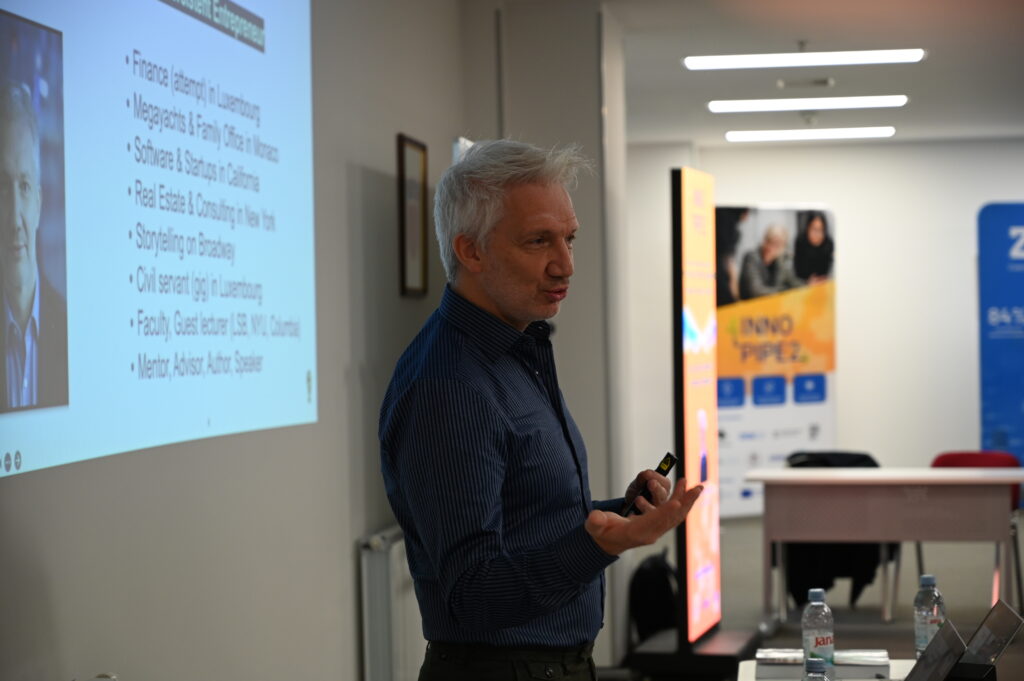
The afternoon session featured Pascal Wiscour-Conter, an international entrepreneur from Luxembourg, lecturer in MBA and executive education programs, and author of The Culture of Purpose: How to Communicate in the Age of Intelligence.
His masterclass, “The Culture & Power of Purpose in Business,” focused on the importance of organizational purpose, authentic communication, and storytelling in developing successful business strategies.
Wiscour-Conter paid particular attention to the role of artificial intelligence in business communication, introducing the distinction between Creative AI and Lazy AI.
He emphasized the importance of using technology intentionally as a tool to enhance creativity, productivity, and strategic thinking, rather than relying passively on AI-generated content.
Through practical examples and an engaging presentation style, he demonstrated how organizations can connect their vision, mission, values, and business strategy to create authentic stories that deliver meaningful value to stakeholders.
His approach highlighted that, in a world where technological tools are becoming increasingly accessible, the ability to communicate clearly, understand audiences, and build trust is an important competitive advantage.
Eight Hours of Inspiration, Practical Insights and Meaningful Exchange
Despite the full-day schedule, both speakers maintained a high level of audience engagement through their experience, energy, and outstanding presentation skills.
The combination of timely topics, practical applicability, and exceptional delivery was one of the defining strengths of this year’s masterclass.
Their two distinct yet complementary perspectives addressed important questions about the future of work and business: How can organizations develop emotional intelligence? How can leaders guide people through change? How can businesses build authentic communication? And how can artificial intelligence be used to strengthen rather than replace human creativity?
The participation of 180 attendees, both onsite at ZSEM and online, further demonstrated the relevance of these topics to the business and academic communities.
4InnoPipe2: Connecting Education, Innovation and the Business Community
The masterclass was organized as part of the international project 4InnoPipe2 – Strengthening Innovation Pipelines for Impactful Universities 2.0, which focuses on developing innovation and entrepreneurial competencies while strengthening collaboration between higher education institutions and the business sector.
Through initiatives such as this masterclass, ZSEM continues to connect international experts, the academic community, and business professionals, creating opportunities for knowledge exchange and professional development beyond traditional educational settings.
The return of Chuck Garcia and Pascal Wiscour-Conter for the second consecutive year, together with the increase in participation from 100 to 180 attendees, highlights the growing interest in initiatives that connect technology, business, and human development.
This year’s masterclass once again demonstrated that the future of successful business depends not only on technological progress but also on our ability to develop emotional intelligence, creativity, authentic communication, and effective leadership.